Books |
We Used to Own the Bronx: Memoirs of a Former Debutante
Eve Pell

By
Published: Jul 08, 2009
Category:
Memoir
In 1654, when Thomas Pell bought land in what is now the Bronx and Westchester County, the British crown gave him a title: Lord of the Manor of Pelham.
A revolution and three hundred years later, the Pell family still believed in privilege — Eve Pell describes herself as “a snobbish fox-hunting debutante” who was educated only because girls have to do something until their husbands appear.
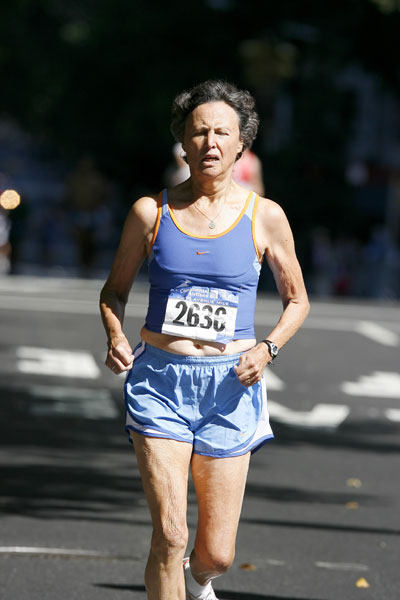
Her husband showed up, right on time. Three children followed. And then something happened that wasn’t in the script — Eve Pell divorced, befriended the Black Panthers, made documentary films that explored the nasty side of American politics and, in her 60th year, became a world-class runner.
She tells that before-and-after story, briskly and with considerable flair, in We Used to Own the Bronx: Memoirs of a Former Debutante. If you’ve ever pressed your nose to the chintz-covered window of Old Money and wished you were born into a great American family, this is the book you need — Pell will take you inside the mansion and share every glorious and terrible secret of the aristocracy.
Her mother was so self-involved she never told Eve she loved her until she was 68 and failing. Her father was so cheap he went to a dentist in Queens. Her stepfather’s solution to her brother’s bed-wetting: take him to the basement, spank him with a dog collar. Such was life in the mansions of her youth. “Books and servants,” she writes. “They were the consolations.”
How cruel is exclusivity? Try this:
A boarding school classmate of mine told me about the childhood game called “Club” that she played at private school in first grade. “The point of Club was that two or three girls would belong and gather under the sliding board at recess. Then another one would ask, ‘Can I belong?’ The girls would say ‘No.’ The rejected child would have to go away. That game of Club was a metaphor for the way we lived our whole upper-class lives.
But they had manners. Lord, they had manners. Her brother got a Wellesley girl pregnant, so he married her. At his second marriage, which he also didn’t feel he could avoid, he was so drunk he couldn’t walk down the aisle. There was no third marriage — he shot himself. Any why not, really? His future was to drink and clip the coupons of the bonds he inherited.
A job for Eve? “Prostitutes earn money,” her stepfather sneered. Still, she got one at CBS, where she listed CEO William S. Paley — her aunt’s husband — as a reference. Then her husband came along and she became the cigarette he routinely crushed under his heel.
But as the 1970s dawned, she was living in San Francisco, and she started asking the same questions as less privileged women. Like: “Why were men always in charge?” As many women have learned, that question can lead to a new life — it certainly did for Eve Pell.
And now? First, a second career as a long-distance runner:
After turning 60 in 1997, I had my best year ever. I won the over-60 age group at the Boston Marathon, finishing in 3:25, a personal best, and went on to win two gold medals in international competition in South Africa. After that, I broke the age-group world record for 10,000 meters on the track and at the end of the year was ranked #1 woman U.S. road racer in the 60-64 age group.
And then, more wisdom than you’d expect in a “society” memoir:
Some fortunate people are born knowing just what they want to do: They make hard choices, keep their goals in mind, work very hard, and succeed. Maybe one has to do that to succeed in important ways — like becoming Secretary of State, running a Fortune 500 company or winning gold medals in Olympic competition. But for those of us content with smaller triumphs, sometimes adventures come unbidden and unexpected. The only choices we must make are whether to let an opportunity go by, or to take it up and follow where it leads.
Eve Pell makes me want to lace up my running shoes — real and metaphorical — and get going.
To buy “We Used to Own the Bronx” from Amazon.com, click here.