Books |
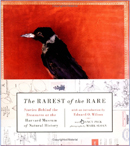
The Rarest of the Rare: Stories Behind the Treasures at the Harvard Museum of Natural History
Nancy Pick

By
Published: Jan 01, 2005
Category:
Non Fiction
The Rarest of the Rare:
Stories Behind the Treasures at the Harvard Museum of Natural History
by Nancy Pick
It’s the lowest point of winter here. Any week now, baseball players will head down to Florida for what they call Spring Training, but the only Spring Training is these parts is the work I do three times a week at the gym and the chilly, bundled-up walk I take to get there.
So it was a thrill to find a beautiful, informative coffee-table book that’s considerably smaller, less costly and more informative than most coffee-table books. Indeed, “The Rarest of the Rare” is more like an invitation to dream of exotic places, fascinating expeditions and late-night conversations around crackling fires with men and women who make Indiana Jones sound dull.
Actually, the only place we’re going is to the museum at Harvard that’s easiest to overlook. If you know anything about it, it’s because you’ve heard of its collection of glass flowers. But as this book attests, there’s much, more to savor in its collection of 21 million specimens. (The “Egg Room” alone has 30,000 boxes of birds’ nest and eggs — no wonder an early part of the museum was called The Repository of Curiosities.)
The format of most of the book is the ultimate in reader-friendliness: an amazing page of photography, a lively page of text. And the things you learn!
Consider:
Linnaeus mounted fish as if they were plants.
Henry David Thoreau harvested cranberries for his Thanksgiving dinner.
A fossilized butterfly last flew some 35 million years ago.
The blue feathers of tanagers are not the result of blue pigment.
The egg of an elephant bird — a bird that weighed 1,100 pounds and couldn’t fly — holds almost 2.5 gallons.
In the late 1960s, eggshells from the musem helped to prove that DDT was weakening the eggshells of birds of prey.
The novelist Vladimir Nabokov collected the genitalia of dissected butterflies.
You come away from this book with a very clear understanding that our planet is still miraculous and uncharted — that there is much in the natural world we have never seen or identified. And, if you are lucky, you come away with a cleansed mental palate; you have a fresh appreciation of the remarkable creatures that were once our near neighbors.
If I needed a gift book….a hostess present…..a token of esteem for a co-worker….a way to tell someone “You deserve something smart, and I’m just the one to know where to find smart things” — this is the book to buy. And if gray days have you feeling blue, it’s a favor you can do for yourself.
To buy “The Rarest of the Rare” from Amazon.com, please click.