Books |
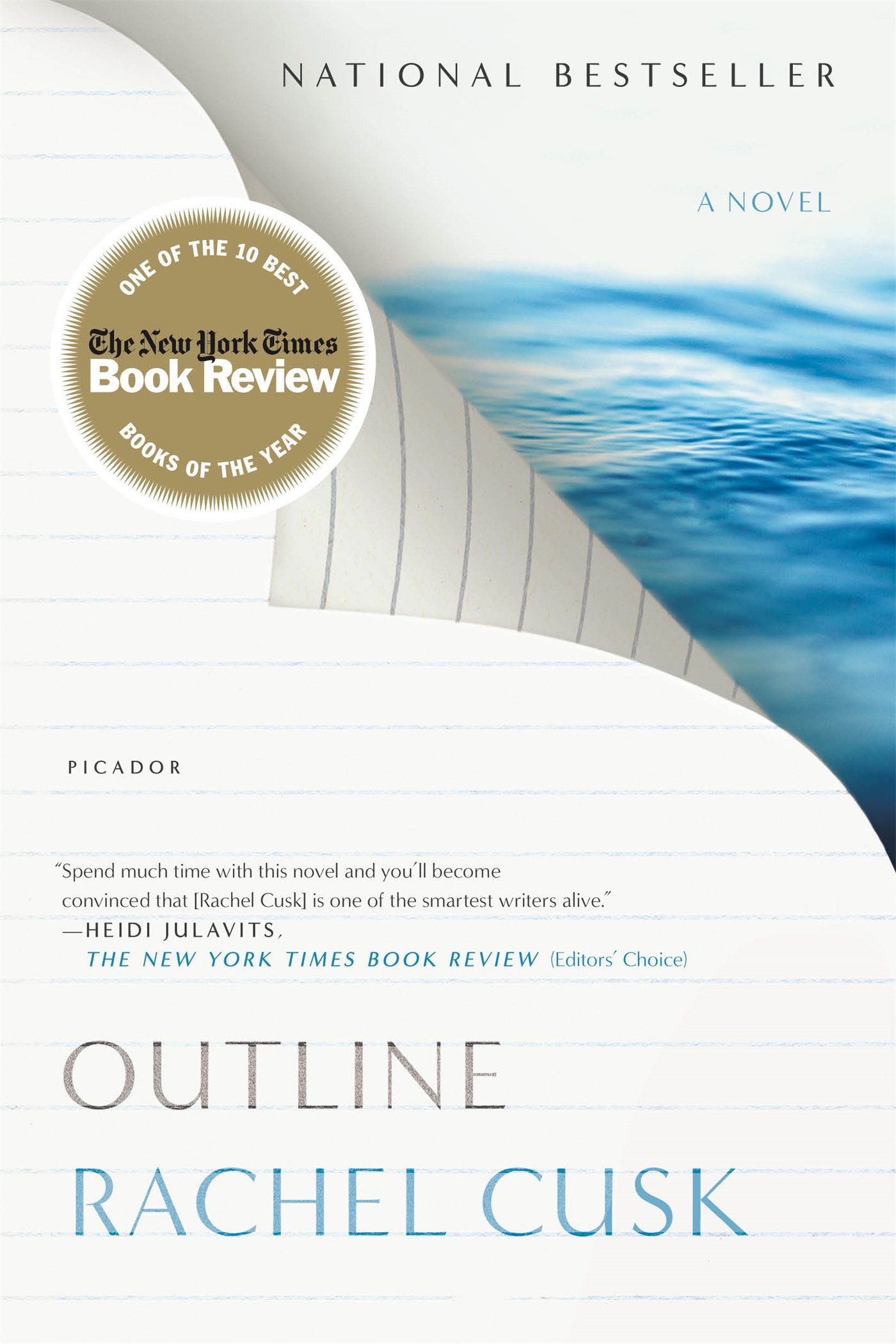
Rachel Cusk: Outline: A Novel

By
Published: May 08, 2016
Category:
Fiction
It took me weeks to read “Outline,” which is odd, because it’s only 247 pages. I carried it everywhere, and people I saw more than once during that time commented that I seemed to be in no rush to finish it. True. I didn’t want it to end. And it was so rich I couldn’t swallow more than a few pages at a time.
Why is “Outline” the best novel — well, two-thirds of the best novel — I’ve read in a long time?
The easy reason is the style, which is completely original and, for some readers, certain to annoy. A writer — female, divorced, living in England — flies to Athens in the summer to teach a week-long writing seminar, meets a man on the plane, has a conversation, has other conversations and leaves. We don’t learn her name (Faye) until we’re 36 pages from the end. And by conversations, I don’t mean dialogue, with quotation marks and attributions and short, punchy exchanges. When someone talks in ”Outline,” Faye reports on the conversation, which is often a monologue, with commentary; the book is a record, which is not to say a transcription, of those encounters.
The bigger reason is what Rachel Cusk knows. The cliché is that great writers say what we can’t or won’t. Cusk does that, but she does something beyond that — she tells us what we will come to think. I have personal experience of this. I’m writing a novel that deals with some of the issues — marriage, romance, parenting — that Cusk does, and I’m just ramping onto the road that will get me to the ideas she presents. Reading her is like putting on a mental jet-pack. I’ll bet I’m not the only reader who can say that. In fact, I know I’m not: the Times put “Outline” on its list of Best Books of 2015. [To buy the paperback from Amazon, click here. For the Kindle edition, click here.]
For example…
On a man’s divorce: “When he speaks to her [his ex-wife] he imagines quite clearly the life they would have had, the life they would be sharing now. It is like walking past a house you used to live in: the fact that it still exists, so concrete, makes everything that has happened since seem insubstantial.”
On love: “Love restores almost everything, and what it can’t restore, it takes away the pain.”
On a damaged relative, living at home again: “Your failures keep returning to you, while your successes are something you always have to convince yourself of.”
On marriage: “You build a whole structure on a period of intensity that’s never repeated.”
On a marriage dissolving: “They were struggling to free one another, yet the very last thing they could do was leave one another alone.”
On busy lives: “You never hear someone say they wanted to have an affair but couldn’t find the time, do you?”
On parenting: “Your children are exempt only from your own judgment.”
And yet I only adored about two-thirds of “Outline.” The stylistic trick — I hesitate to call it a gimmick — gets old. And at least two of the conversations were with characters I just didn’t care about. So I skimmed. And then skipped. I encourage you to do the same.
Despite that, I strongly recommend “Outline” for those of you who are feeling… removed from the emotional mainstream. And for serious readers who don’t find enough nutrition in the much-hyped books that promise rewards and don’t deliver.
One thing about Rachel Cusk that’s unfailing: She stirs the pot. She wrote a book about motherhood that didn’t quite say it was the greatest job on the planet, and it seemed that all England shook a fist at her. Her husband quit his job to be a house-husband so she could write full time. When they divorced, he sued her — as if he was the wife — and won. And of course she wrote about that, and many said she should never have done such a hurtful thing to her children.
But that hurtful thing — I mean the end of the marriage and what followed — led her to this book:
“You are chucked out of the house, on the street, not defended any more, not a member of anything, you have no history, no network. What you have is people, strangers in the street, and the only way you can know them is by what they say. I became attuned to these encounters because I had no frame or context any more. I could hear a purity of narrative in the way people described their lives. The intense experience of hearing this became the framework of the novel.”
If you know how that feels, here’s your next book.
—-
To read an excerpt from “Outline,” click here.