Books |
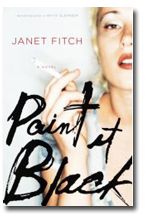
Paint It Black
Janet Fitch

By
Published: Jan 01, 2006
Category:
Fiction
A mutual friend said we’d like one another, so when Janet Fitch came to New York shortly before the publication of her first novel, I went out of my way to be nice to her. That wasn’t hard; she was smart and funny and completely unpretentious. My heart sank for her: unknown writer, weird characters, unlikely plot. This wonderfully idealistic woman had labored mightily for years on a book that was doomed.
That afternoon, I made sure I paid for everything.
What I didn’t know: Months earlier, when Janet was earning her daily bread at a government agency, she got a call from Oprah Winfrey, who loved her book and was choosing it as a selection for her book club. That would make White Oleander an automatic best seller. It would mean a movie deal. And, for the author, first-tier fame.
Because of how we met and the non-literary concerns that define our friendship, I read Janet’s books as if some other person wrote them. My reactions to them feel oddly objective — as a result, I don’t feel I have a conflict if I write about her work.
Now comes her second novel, “Paint It Black.” I sense this will be a tougher sell for some fans of “White Oleander.” In that novel, the big tension was between a young girl and her murderous, genius mother. Tricky, but many women could relate. This time, the tension is again between two women — Josie Tyrell, an artist’s model with the not-for-everyone good looks of a punk rocker, and Meredith Loewy, a concert pianist who moves easily among the cultural elite.
But there is a third character here, and he looms large: Michael Faraday, who is Meredith’s son and Josie’s lover. He’s dropped out of Harvard in his senior year to live with Josie in a back-of-beyond slum in Los Angeles. His new plan is to become a great painter.
Lord, spare me from Harvard dropouts in novels. And more, from Harvard dropouts who take up with scrawny chicks whose fathers own tow trucks in Bakersfield. Starting to read a book with such characters, I feel I’m in for a family drama out of Tennessee Williams or William Faulkner — a bleak stew of drink, drugs and nasty confrontations in the drawing room. (After which, of course, the young lovers work it out in bed.)
Janet Fitch is too good a writer not to see the perils of that clichéd set-up. Indeed, on the first page, she has Josie muse about Yoko Ono. (The book is set in 1981; John Lennon’s just been murdered.) “Nobody ever really loved a lover,” she notes. “Because love was a private party, and nobody got on the guest list.”
But a few pages in, Josie gets a phone call. The police. A white man, registered as Oscar Wilde, has been found in a motel room near Twentynine Palms, in the desert. He’s dead, with a gun in his hand.
How can this be? Michael said he needed some time alone, but he wasn’t depressed. He owned no gun and hated violence. He didn’t drive.
This man she loved — who was he?
The 400 pages of this novel are the answer. Not an easy answer. And not a pleasant answer — Josie goes through hell. The ingredients are punk music clubs that “yearn for arson,” way too much vodka, enough drugs to keep several bands going, sex in alleys and grungy beds, steamy roles in art movies — and Meredith’s mansion, which draws Josie to it over and over.
The “truth” of a plot is generally banal. The truth of a life is not. Josie is going for the big truth, and though she has nothing on her side — “she knew her level and could sink to it anytime” — you can’t fault her quest. Soon, you’re rooting for her. Especially because Meredith is such a professional monster…
The thing is, Josie sees more: “Nobody knew anyone’s private world. In the end, they were all alone as inmates on death row, side by side. Sometimes you could get a look at one another with a little pocket mirror, cell to cell, but that was all.” If only Michael had taken her with him. If only he had killed her first. Well, what did you expect from a book that takes its title from a Rolling Stones song: “I see a red door and I want it painted black/No colors anymore I want them to turn black…”
In an interview, Janet Fitch lists her influences. Among them: Patti Smith, “who inspires me always.” That is Patti Smith of “Because the Night.” Patti Smith of “Power to the People.” Patti Smith would never write a 400-page bummer. Patti Smith would never let a brave kid on a quest be discarded like trash.
So the final twenty pages of this book are something else. They too are nasty and unpleasant. But they are shot through with grace. Resolve is rewarded. A debt is paid forward. And when it’s over, you sit amidst the desolation of these lives and their desperate forward motion, and if you do not mutter “magnificent…fabulous, “ then you did not read the book I did.
To buy “Paint It Black” from Amazon.com, click here.
To buy “White Oleander” from Amazon.com, click here.