Books |
Camp Camp
Roger Bennett & Jules Shell

By
Published: Jan 01, 2008
Category:
Memoir
The kid freaked out, ran off the bus. Much screaming from other kids — it was time to leave. The kid’s parents told their daughter they’d follow the bus — a four-hour drive — and if, at the destination, she still wanted to come home, they’d be right there for her. She agreed. Returned to the bus. It pulled out. The parents drove straight home.
The destination: sleepaway camp.
Which is described by the authors of this 300-page picture-and-text romp as “the definitive formative experience for our generation.”
Ah….summer camp in the Reagan-blissed 1980s. If you were there, it’s just far enough away that nostalgia can creep in. But then, I’m told, camps are eternal, each with a self-renewing culture that binds campers across generations.
“Camp was culture that had a place for everyone in it — the beautiful and the athletic shone, but if you had neat handwriting, or were the king of the archery range, or were a masterful pianist, you could find your niche,” says co-author Roger Bennett. “And camp is a place where everyone gets a second chance to be the kind of kid they always wanted to be. Everyone gets a fresh start to define themselves, free of the shackles of their hometown reputations. If you longed to be a raconteur, a ladies’ man, a dodgeball expert, you could reinvent yourself with confidence.”
Sounds appealing. But back up the train. Did the man say culture?
— In their cabin, some girls found “somebody’s ginormous box of winged maxi pads.” On one, they wrote in red Sharpie, “Sara, this is your period speaking to you.” They placed that maxipad — “crotch-up” — in a pair of Sara’s undies in her cubby.
— You know about “trucking”? You wait till a kid’s asleep, then shine a flashlight on his head and yell “TRUCK” to wake him. “He would freak out, thinking he was in the middle of the highway.”
And six varieties of wedgies, warm bowls of water for a sleeping camper’s hand so he’ll wet the bed, and much more. I can see why one of the authors recalls a correspondent saying, “Only the two summer months were in color and the rest of Jewish life was lived in black and white” — the freedom from parental oppression is palpable as teen lust in these pages.
As for the Jewish reference, goyim are on notice: This book is heavily weighted toward the tribe. Tens of thousands of American camp vets sent photos and stories to the authors — it’s telling that the bully story is told by A.J. Jacobs, who went on to write The Year of Living Biblically. And for every Sloane Crossley, there seem to be a dozen Simmy Kunstavitzs. Did only Jews go to camp? (And did their parents all drive black Mercedes or Cadillacs?) For that matter, did the kids at Camp Tel Yehudah really write and perform a stage version of an Elie Wiesel Holocaust memoir… to the music of Billy Joel?
But some things are universal: Food fights. Color wars. Legendary counselors. Constipation. Teased hair. Two-day romances. Flag raising. Letters home. Day trips. Overnights. A camp show with a corny title, like “Puttin’ on the Hits”. And that heartbreaking ceremony on the last night: pushing mini-rafts dotted with lighted candles onto the pond.
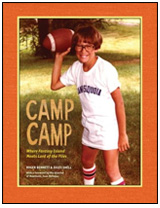
All that and more is admirably covered here. And the images are yearbook quality: a collection of letters, pictures and souvenirs. Never change. See you next year. But, please, with better hair, okay, kids?
“Camp Camp” will be catnip for those who still have their camp t-shirts, go to reunions, send their kids where they went. If you never went to summer camp — and I’m raising my hand here — it’s a shocker, an eye-opener on the scale of your first sexual experience. Which, come to think of it, may have come a few years earlier for kids who went to camp.