Books |
Women in Shadow and Light
Jan Goff-La Fontaine

By
Published: Jan 01, 2005
Category:
Non Fiction
Short Takes (Non-Fiction)
Runaway American Dream
Jimmy Guterman
There’s one in every crowd — the kid who knows all about music. He makes the best mix tapes. He tells you about the concerts you must see. And he can talk about the music he loves in a way that makes you want to do nothing more than slam his favorite in your CD and crank it way up.
Jimmy Guterman is that guy, and Bruce Springsteen is his expertise, and the good news is that he’s no pedant — “Runaway American Dream” is just his side of the conversation he’d have with you over a beer. His theme is meaning: what it is about Springsteen’s songs that makes them matter, decade after decade. His method is radical; mostly, he considers concerts and looks at how Bruce paints a self-portrait over the course of an evening. (And, yes, he’s been going to Springsteen concerts almost from the beginning of Bruce’s career.)
Guterman is both wonderfully enthusiastic (“the most exciting segue ever on a rock ‘n roll record”) and blissfully objective (“he hasn’t changed much in the more than 30 years since he started recording”). And he is shrewd: The title phrase, “Runaway American dream,” speaks to “both the optimism…and the less pleasant reality of a dream gone awry.”
Springsteen is, Guterman notes, “a multimillionaire guitar player” who goes back to “a five-star hotel” after every concert. In these pages, he shows us why we never think that, why we see our battles as his, and why, after all the hoopla, there’s still a lot about Springsteen to excite and inspire us. The pages fly by like a guitar solo that you could stand to hear more of.
To buy “Runaway American Dream” from Amazon, click here.
Women in Shadow and Light
Jan Goff-La Fontaine
I’m sure Jan Goff-La Fontaine is a good person and no egomaniac, but you’d never know it from the start of her book. In the summer of 2003, she launched a project in Door County, Michigan — “the Cape Cod of the Midwest” — to explore sexual violence against women and celebrate those abused women who refused to see themselves only as victims. She wanted their stories, but she wanted more — she asked them to pose nude for her camera. And then she asked them to perform in front of their neighbors.
This is loaded material, and it packs a predictable wallop. It also packs a great many testimonials to Jan for the “special experience” that allowed these women to “transform” themselves and “heal.” Okay, I’m a man, I’ve never been raped; only a jerk gets hung up on the language of a woman’s healing process after she’s been abused. But must we hear, from woman after woman, of her gratitude to Jan? Other gripes: The testimonies are too short. And Jan intrudes there too. And the poems these women write — you’ll cringe.
So why do I recommend this book? Because the combination of text and photos is amazingly powerful; seeing these 40 women really is believing. I completely get that if I were a woman who has been abused and is still silent about it, this book could be the catalyst I need to do something about my situation. So wade through the dross — there’s gold here. And women you cannot help but respect, admire, love. It’s astonishing, but this book really is a celebration.
To buy ‘Women in Shadow and Light’ from Amazon.com, click here.
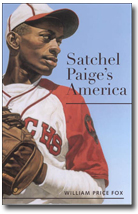
Satchel Paige’s America
William Price Fox
If you know anything about baseball, you know that Satchel Paige was the greatest pitcher in the history of the Negro Leagues. His stats are just crazy: 64 consecutive scoreless innings, 21 straight wins, and a one year record of 31-4. He could pitch every day, even twice a day. And he could win for more decades than any pitcher in any league.
Paige turns out to be a greater character than he was a pitcher, and this book is the evidence. In 1970, on a magazine assignment, William Price Fox spent a week in Kansas City with Paige. The old pitcher loved to tell stories, but he hated tape recorders and notebooks. Fox plied him with liquor and left his hands empty; at night, he’d scribble down the day’s conversation.
Mickey Mantle? “I gave him my old hesitation pitch, and I’ll be dogged if he didn’t swing before the ball left my hand. Then when I let the ball go, he swung again and missed. Struck at it twice. I hollered in at the ump that should have been two strikes.”
All the stories are like that: rambling, over-the-top, amusing. And, Satch swears, true: “If I’m lying, I’m dying.” Who knows if he’s woofing? Not Bill Fox. Nor does he care. Nor will you. One hundred and forty pages of Satchel Paige is a nice visit. Fox enjoyed himself thoroughly. So will any baseball fan.
To buy ‘Satchel Paige’s America’ from Amazon.com, click here.