Products |
Weekend Butler: One musician’s rights are more valuable than Taylor Swift’s — who is he? Must-see TV (It’s not Capote and the “swans.”) An Ohio dentist…and Maureen Dowd. A Seamus Heaney poem. Black Pepper and Onion Spaghetti.
By
Published: Feb 22, 2024
Category:
Weekend
I’M SO BORED. AREN’T YOU?
Every movie release, every new book from a best-selling author, every music CD that’s taken a decade to be completed — the hype is relentless, especially in the New York Times, which is so over-excited about everything that you think you must gobble it up or you won’t be part of the national conversation. A week later, you start to hear the complaints — the three-and-a-half-hour movie would be more watchable if it were an hour shorter, the new music CD doesn’t represent much of an advance from the last one, and the don’t-miss-it Broadway play has the faintly recycled odor of an op-ed column.
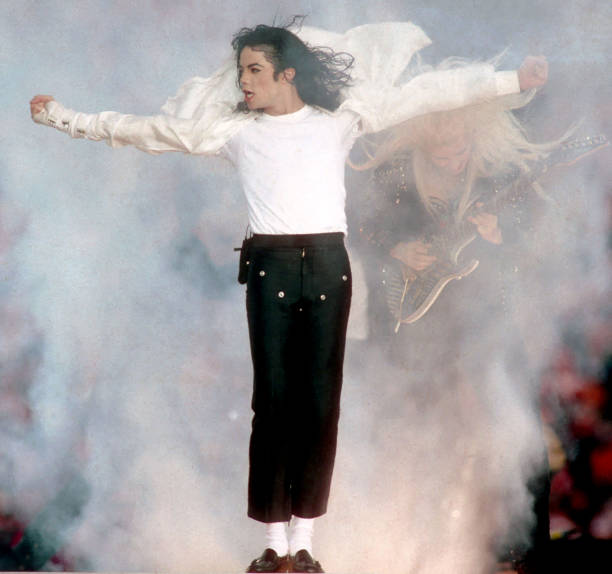
I remember fondly the decades before Netflix, when we went out to an affordable Cuban-Chinese dinner at Le Caridad before a concert at the Beacon, and the night seemed human-scaled and rich with possibility. It says something about the sludge of this season’s cultural news that the most exciting event I can think of is the sale of Michael Jackson’s music catalogue, which brought his estate a world-record $1.5 billion — and that was just for a 50% stake in Jackson’s recorded music and songwriting catalogs. Springsteen, in comparison, sold everything for an estimated $550 million. Dylan sold his catalog of more than 600 songs for about $300 million. Neil Young sold half of his copyrights for an estimated $150 million.
You’ll note that all these large deals have gone to musicians who began their careers in the ‘60s and ‘70s. The only contemporary talent you can point to is Taylor Swift, who has become a billionaire without selling anything. You can cite reasons that have nothing to do with creativity — in particular, streaming and the necessity of arena tours to generate income — but you very quickly find yourself admitting that no one out there has you pulling the car to the side of the road when the hit of a hot young talent comes on. Why is that? I’m not the only one who says: politics. More correctly, the lack of politics. Musicians used to take positions. Now it’s as if they’re afraid of alienating anyone.
Want to see passion and commitment? Look at this. All these years later, I get excited all over again. Feeling down? Bored? Annoyed 24/7? Go to Netflix. Feel a bit more alive.
MUST SEE TV
In 1991, I wrote “Trump: What’s the Deal?” for Libby Handros. It was a hot documentary — and it was suppressed. In 2015, it was finally liberated; you can watch it on Amazon Prime Video. A few years ago, Libby told me about Mary Meyer, JFK’s last and most serious lover — a year after the assassination, Mary was murdered and her diary was burned. That idea grew up to be my much-praised novel, “JFK and Mary Meyer: A Love Story.” Now Libby and John Kirby have made a documentary series, “Four Died Trying,” about JFK, his brother Bobby, Martin Luther King, and Malcolm X. The connection: all were killed — and the official stories have never seemed credible. Each episode presents information most of us have never seen before. It’s a challenging, chilling, disturbing series — considerably more compelling viewing than Capote and his “swans.” The prologue is on Amazon Prime Video. More chapters coming soon; check the website www.fourdied.trying.com for information.
AN OHIO DENTIST… AND MAUREEN DOWD
I was standing in a Ohio kitchen with a man who was said to be the richest dentist in Ohio. He was telling me how every word in the New York Times was edited to reflect a particular point of view. I said that was not my experience — I’d been contributing to the Times for decades, and my editors only focused on style and factual accuracy. He looked stunned – and walked away.
Last week, like many, I commented on “The Florida Fraudster and the Russian ‘Killer,’” a self-congratulatory Maureen Dowd column. We reminded the Times that Dowd was once Trump’s willing handmaiden. I wrote: “When the priority is access, Dowd 2016 is the inevitable result.” The Times published my comment: “Your comment has been approved! Thank you for sharing your thoughts with The New York Times community.” A day later, it was gone: “2/18. The comment you are looking for is currently unavailable.” And I thought of the Ohio dentist.
MUST SEE TV
In 1991, I wrote “Trump, What’s the Deal?” for Libby Handros. It was hot It was suppressed. In 2015, it was finally liberated; you can watch it on Amazon Prime Video. Decades later, Libby told me about Mary Meyer, JFK’s last and most serious lover — a year after the assassination, she was murdered and her diary was burned. That idea grew up to be my much-praised novel, “JFK and Mary Meyer: A Love Story.” Now Libby and John Kirby have made a compelling documentary series, “Four Died Trying,” about JFK, his brother Bobby, Martin Luther King, and Malcolm X. The connection: all were killed — and the official stories have never seemed credible. Each episode presents information most of us have never seen before. It’s a challenging, chilling, disturbing series. The prologue is on Amazon Prime Video.
WEEKEND MUSIC
Eric Clapton. Steve Winwood. “Can’t Find My Way Home.”
WEEKEND POEM
“Scaffolding,” by Seamus Heaney
Masons, when they start upon a building,
Are careful to test out the scaffolding;
Make sure that planks won’t slip at busy points,
Secure all ladders, tighten bolted joints.
And yet all this comes down when the job’s done
Showing off walls of sure and solid stone.
So if, my dear, there sometimes seem to be
Old bridges breaking between you and me
Never fear. We may let the scaffolds fall
Confident that we have built our wall.
THE WEEKEND MOVIE
“To Leslie” opened in October, 2022. A third-string NY Times critic called Andrea Riseborough’s performance “deft” and praised “this deceptively simple yet heart-wrenching character study.” The film grossed just $27,000.
Andrea Riseborough, an actress better known in England than here, has friends. Famous friends. And in the weeks before Oscar nominating season, those friends got loud. Cate Blanchett, a certain Best Actress nominee for “Tar,” included praise for Riseborough when she accepted a Critics Choice award. Kate Winslet said Riseborough gave “the greatest female performance onscreen I have ever seen in my life.” Gwyneth Paltrow posted on Instagram. Howard Stern, who acted with Riseborough in his long ago film “Private Parts,” praised the film on his satellite radio show.
When the nominations for Best Actress were announced, there was Andrea Riseborough.
Studios spend millions promoting stars in awards season. This campaign didn’t cost a dollar. Did Hollywood cry foul? Of course, and the stunned members had a point: if anyone directly called Academy voters to lobby for Riseborough or organized informal screenings, that would be a violation of Oscar rules.
The Academy of Motion Picture Arts and Sciences launched an investigation. Breath was held in two countries. The Academy announced the nomination was legit… but maybe just this once.
My take: “To Leslie” is brilliantly scripted and directed, and that intensifies Riseborough’s performance, which is so gritty and searing I wanted to turn away. I was so thrilled to be watching a real movie that I couldn’t. Simply, “To Leslie” was worth the discomfort, and I was so relieved for her revival I didn’t even bitch about the improbably happy ending.
The trailer will give you some idea what awaits you. Watch here.
To stream the movie on Amazon Prime, click here.
WEEKEND READING
Craig Unger:”American Kompromat: How the KGB Cultivated Donald Trump, and Related Tales of Sex, Greed, Power, and Treachery”
I’m pleased that Craig Unger and I are friends, and sad that is why I can’t ethically review his book. I was a source, I’m briefly quoted, and I’m thanked. So all I can say is that “American Kompromat: How the KGB Cultivated Donald Trump, and Related Tales of Sex, Greed, Power, and Treachery” is the follow-up to his 2018 bestseller, “House of Trump, House of Putin: The Untold Story of Donald Trump and the Russian Mafia.” As the title of the new book suggests — “Kompromat” is Russian for “compromising information”— Trump is nothing less than a Russian “asset.” Not officially, of course. But from the beginning of his real estate career, he eagerly did business with the Russians, most of them shady and connected to the KGB. This relationship started small, with television sets for the Hyatt Hotel. An American immigration reform allowed hundreds of thousands of Russian Jews to immigrate to the United States. Lo and behold, 1,300 Trump condos were sold in “secretive, all-cash transactions that enabled buyers to avoid legal scrutiny by shielding their finances and identities.” And then, because Trump needed money and liked sex, we meet a grotty bunch, including, of course, Jeffrey Epstein. I knew a lot of this story, and it wasn’t hard to figure out why Trump was so fond of Putin, but it’s still mind-blowing to read how the President put his needs above his country’s. [To buy the book of “American Kompromat” from Amazon, click here. For the Kindle edition, click here.]
WEEKEND RECIPE
Black Pepper and Onion Spaghetti
Ali Slagle, in the Times: This rendition of Florentine spaghetti with red onions is so superlative, it has remained on the menu at Locanda Vini e Olii since the restaurant opened in Brooklyn in 2001. Michele Baldacci, the chef and co-owner, recommends a mixture of white and red onions for a more delicate, saucy result, and cooking them in a covered pot so they slowly braise in olive oil and their own juices. The sweetness of the onions is accented by tarragon and black pepper, plus optional grated cheese (which can be omitted for vegan diners). “We never add anything [else], we’re boring,” Mr. Baldacci said, but reckons livers would be delicious.
4 servings (about 2 cups sauce)
½ cup extra-virgin olive oil
1 pound white onions (about 3 medium), sliced ¼-inch-thick
½ pound red onion (about 1 medium), sliced ¼-inch-thick
Salt, freshly ground black pepper
12 ounces spaghetti or bucatini
2 tarragon sprigs, leaves only (about 2 tablespoons)
Finely grated Grana Padano or Parmigiano-Reggiano cheese (optional), for serving
PREPARATION
In a large Dutch oven or skillet with a lid, add the olive oil and white and red onions and set over medium heat. Once sizzling, cook until onions are slightly wilted and starting to sweat but not browned, 5 to 7 minutes. Stir in ½ teaspoon salt, cover, reduce heat to low and simmer, stirring occasionally, until the onions are very soft and translucent but mostly still in strands, about 1 hour. Adjust heat as needed to maintain a simmer, and if the onions are burning, add a few tablespoons of water. (Onions can be made ahead and refrigerated for 1 week or frozen for a couple months.)
When you’re ready to serve, bring a large pot of salted water to a boil. Add the spaghetti and cook until al dente according to package directions. Reserve 1½ cups pasta water and drain.
Add ½ cup pasta water, the pasta and the tarragon leaves to the onions. Raise heat to medium-high and stir vigorously until the pasta is well coated in sauce, 1 to 2 minutes. Add more pasta water as needed until the noodles are glossy. Season to taste with salt.
Transfer the pasta to plates or shallow bowls and cover with cheese (if using) and generous grinds of black pepper.