Books |
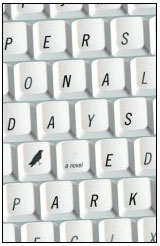
Personal Days
Ed Park

By
Published: Jan 01, 2008
Category:
Fiction
Lizzie, Jonah, Pru, Crease, Lars, Jill, Jenny and Jack II work in a Manhattan office that is the eastern outpost of an Omaha-owned company. Once this place was something; now it may be sold for scrap to some unknown Californians. “The Firings” have been going on for a year. There are a lot of empty desks. And there will be more.
This isn’t the world of Office Space, the film about a stupid boss, unhappy workers and cubicles as far as the eye can see. That was a comedy. That is, if you were young and jaded and had first-hand experiences of exchanges like this:
DOM: We need to talk about your TPS reports.
PETER: Yeah. The coversheet. I know, I know. Uh, Bill talked to me about it.
DOM: Yeah. Did you get that memo?
PETER: Yeah. I got the memo. And I understand the policy. And the problem is just that I forgot the one time. And I’ve already taken care of it so it’s not even really a problem anymore.
DOM: Ah! Yeah. It’s just we’re putting new coversheets on all the TPS reports before they go out now. So if you could go ahead and try to remember to do that from now on, that’d be great. All right!
“Office Space” came out in 1999, when tech was booming and a pulse was about all you needed to get a job with stock options attached. Personal Days appears in the summer of our discontent, when getting fired can be your ticket right out of the middle class. “Funny” isn’t what it used to be.
And yet “Personal Days” is funny. Deadpan black-humor funny. Too smart for the job funny. Waiting for the inevitable to happen funny. And a large part of that is because so little happens — in place of plot and story, there are character descriptions, ironic meditations, uneasy speculation.
The bosses here are not just stupid, they’re evil. My favorite was Maxine, who has a bod for sin and a vague job title. She just might outrank the apparent boss, “the Sprout”, so nicknamed because his first name is Russell, which rhymes with Brussels. What’s her mission?
But the worker bees are the real freaks. Lars is the mad Googler; he goes down to the 35th screen for the real esoterica. Jack II offers backrubs — Jackrubs — between two and three in the afternoon. Jenny has a life coach; she meets him at the Bad Starbucks. (The Good Starbucks is two blocks further and has better ventilation.) Lars had pep, but his co-workers leached it out of him, and now he grinds his teeth in his sleep. Jill has a quiet voice and terminal shyness: “She wants to try therapy but is too shy to call for an appointment.”
Why don’t they leave? That you can ask proves you are not like these kids. Try this: They’re over-educated slackers. Overly bright deer in headlights. Connoisseurs of slow-motion train wrecks. They wouldn’t miss this bummer for the world.
The self-evaluation forms they’re asked to fill out? Back when, they’d respond with snaps like “I enjoy ice cream and unprotected sex.” Now the Sprout demands their names on page one. He says he wants to help them. They know better.
Whenever we sniff a layoff coming, which is always, each one of us thinks, It can’t be me because _________.
Because I have too much work to do.
Because I’m exploited as it is.
Because, really, how much money would they save by getting rid of me versus what untold profits my labor/hard-earned know-how brings in?
I mean I’m joking but seriously.
Realistically, no way can it be me.
And then, all of a sudden, it is.
The Sprout calls people in to tell them they’re doing a great job; within a month, they’re history. Jill is moved to Siberia, on another floor; she sends desperate e-mails (“I’m dying here”) to her co-workers. Shutting down, computers send ominous messages: “Are you sure you want to quit?
Ed Park is adept at this new lost generation stuff. He should be; in 2006, he was a Village Voice editor fired by absentee owners. The good news is that he’s a very smart writer with a wonderfully bent sense of humor. The bad news is that he has literary aspirations.
He wanted, he says, for the novel to have a style that was like vertigo. Section one (“Can’t Undo”) is 81 pages long and deadpan brilliant; it’s worth the price of admission. Then the book starts getting lost in its style. Section II (“Replace All”) is 100 pages and more fragmented; I had to work harder. By Section III (“Revert to Saved”), caring became a trial — this is a 50-page run-on e-mail, and if the climax of the novel occurs here, I missed it.
“Friends don’t fire friends,” Park writes, and on the strength of the first section alone, I can’t diss this book. Only 81 irresistible pages? That’s 80 pages more than I can stand to read of most new literary fiction.
To buy “Personal Days” from Amazon.com, click here.
For Ed Park’s web site, click here.